



KLOW80 80mg: Complete Research & Safety Guide
What Is KLOW80 80mg?
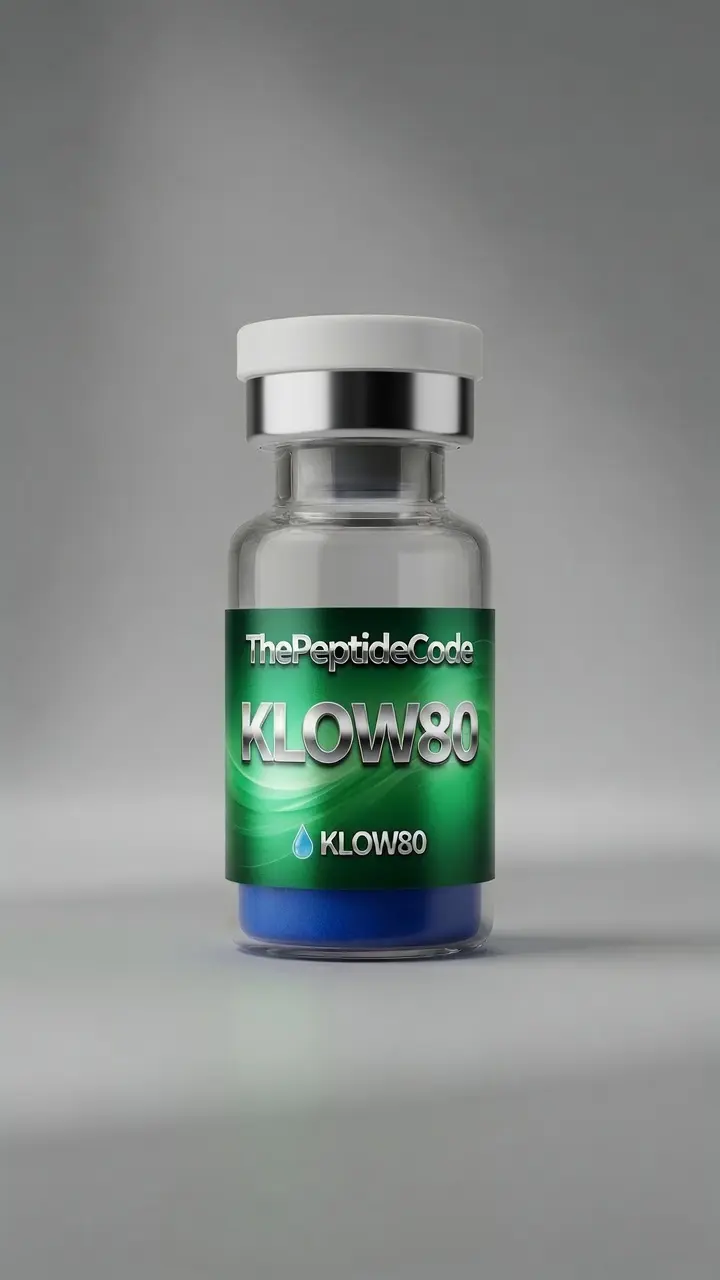
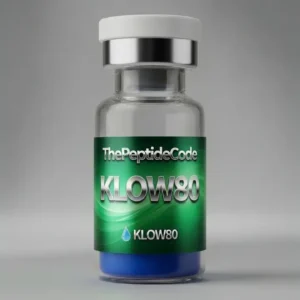
KLOW80 80mg is a multi-peptide research formulation containing four distinct peptide components. Current product documentation commonly lists the composition as GHK-Cu 50mg, BPC-157 10mg, TB-500 10mg and KPV 10mg, giving a total labeled quantity of 80mg.
Unlike a single peptide, KLOW80 is a co-formulation. The four components remain chemically distinct rather than forming one new peptide molecule. This distinction is important when interpreting scientific literature because research involving an individual component does not automatically establish the same findings for the complete KLOW80 formulation.
The 80mg designation refers to the combined labeled quantity of the four components. Exact specifications can vary between suppliers and batches, so researchers should review the product documentation and certificate of analysis associated with the specific material.
KLOW80 80mg Composition
The commonly listed KLOW80 80mg formulation contains:
- GHK-Cu — 50mg
- BPC-157 — 10mg
- TB-500 — 10mg
- KPV — 10mg
GHK-Cu therefore represents the largest portion of the nominal formulation, accounting for 62.5% of the total stated quantity. The remaining three components each represent 12.5%.
Because these are separate molecules, researchers should evaluate their identities, properties and published literature individually when studying the formulation.
GHK-Cu Research
GHK-Cu, also known as copper tripeptide-1, is a copper-associated peptide that has been investigated in research involving extracellular-matrix biology, cellular signaling and skin-related biological processes.
Research into GHK-Cu has examined pathways associated with collagen and matrix regulation, cellular responses and tissue biology. However, evidence concerning GHK-Cu as an individual research compound should not be presented as evidence that the complete KLOW80 80mg blend produces the same effects.
The relatively large proportion of GHK-Cu in the formulation is one of the defining characteristics of KLOW80.
BPC-157 Research
BPC-157 is a synthetic peptide that has primarily been investigated in preclinical research. Published research has examined BPC-157 in experimental models involving tissue biology, cellular signaling and vascular-related processes.
These studies provide a scientific background for investigating BPC-157, but findings from laboratory and animal models cannot automatically be generalized to humans.
Within KLOW80 80mg, BPC-157 represents a nominal 10mg portion of the formulation. Researchers should therefore distinguish research concerning standalone BPC-157 from research concerning the four-component KLOW80 blend.
TB-500 Research
TB-500 is commonly described in commercial research materials as a peptide related to thymosin beta-4 research. Scientific work involving thymosin beta-4 has examined cellular migration, tissue remodeling and other biological processes.
The terminology surrounding TB-500 can vary between suppliers, making accurate product identification particularly important. Researchers should verify the exact material and analytical documentation supplied with a particular KLOW80 80mg batch.
Published research involving thymosin beta-4 or related compounds should not automatically be interpreted as evidence for the combined KLOW80 formulation.
KPV Research
KPV is a short tripeptide consisting of lysine, proline and valine. It is associated with the C-terminal portion of alpha-melanocyte-stimulating hormone and has been investigated in preclinical research involving inflammatory and cellular signaling pathways.
Research into KPV has primarily focused on experimental models rather than establishing clinical effectiveness of KLOW80.
In the commonly listed KLOW80 formulation, KPV accounts for 10mg of the 80mg total.
KLOW80 80mg Research Applications
KLOW80 80mg may be of interest to researchers studying interactions between multiple peptide pathways. Potential laboratory research areas include:
- Peptide interaction studies
- Cellular signaling
- Extracellular-matrix biology
- Tissue-remodeling research
- Inflammatory signaling
- Peptide structure and activity
- Cellular migration
- Experimental peptide formulations
However, there is an important distinction between the research rationale for combining these peptides and evidence directly testing the combination.
Current product documentation indicates that published research exists for the individual components, while the finished KLOW80 combination itself has not been established through controlled clinical trials.
Product Specifications and Quality
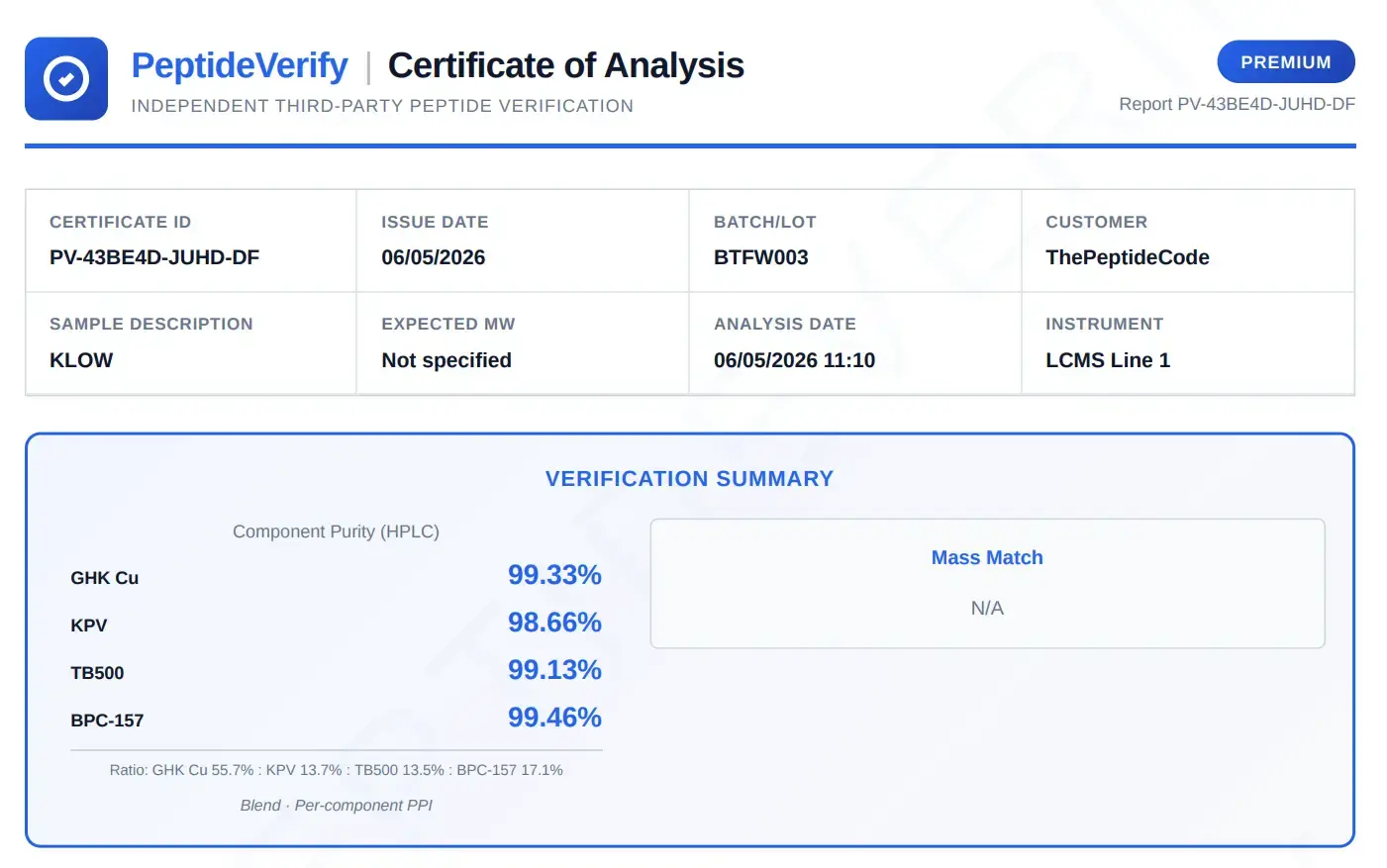
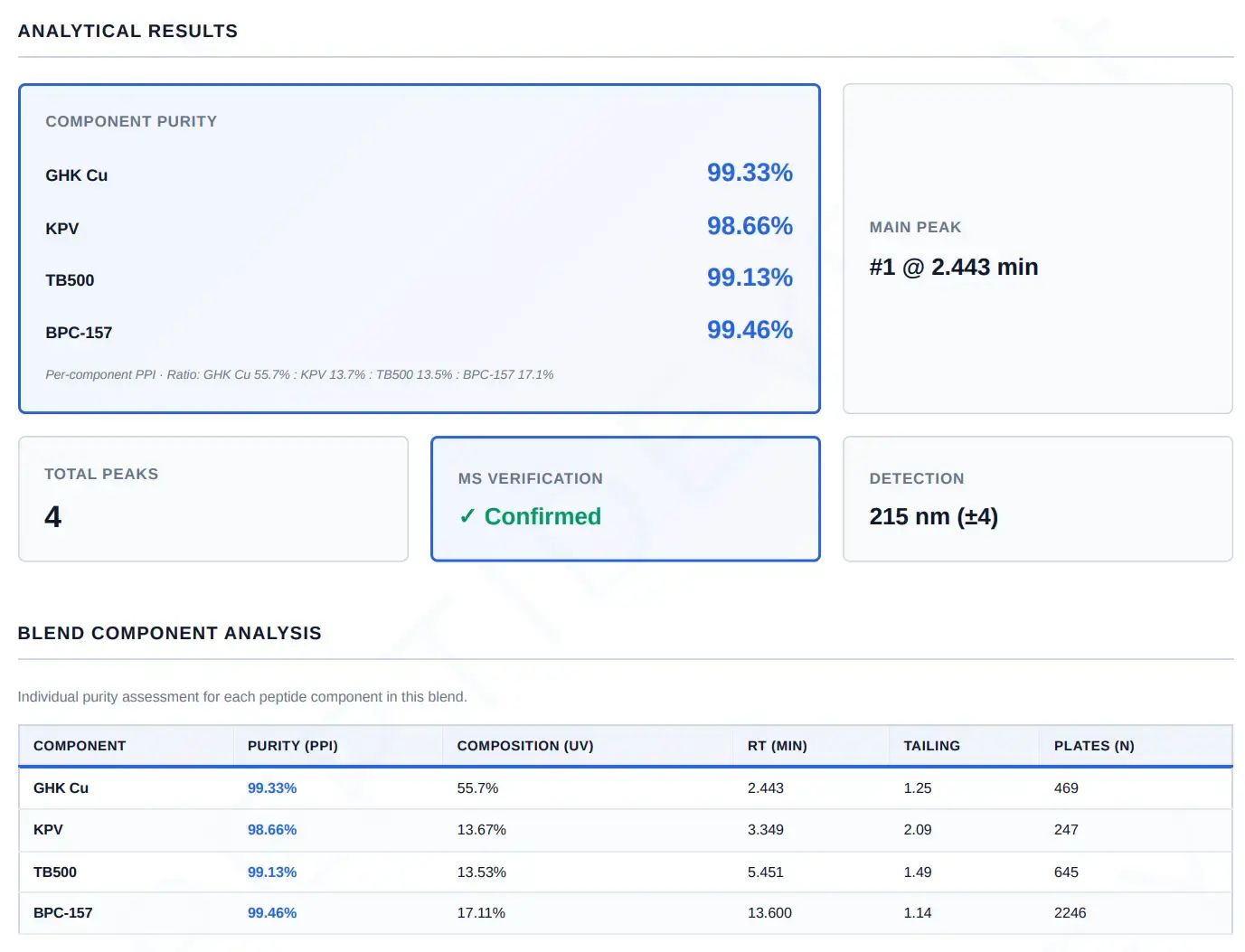
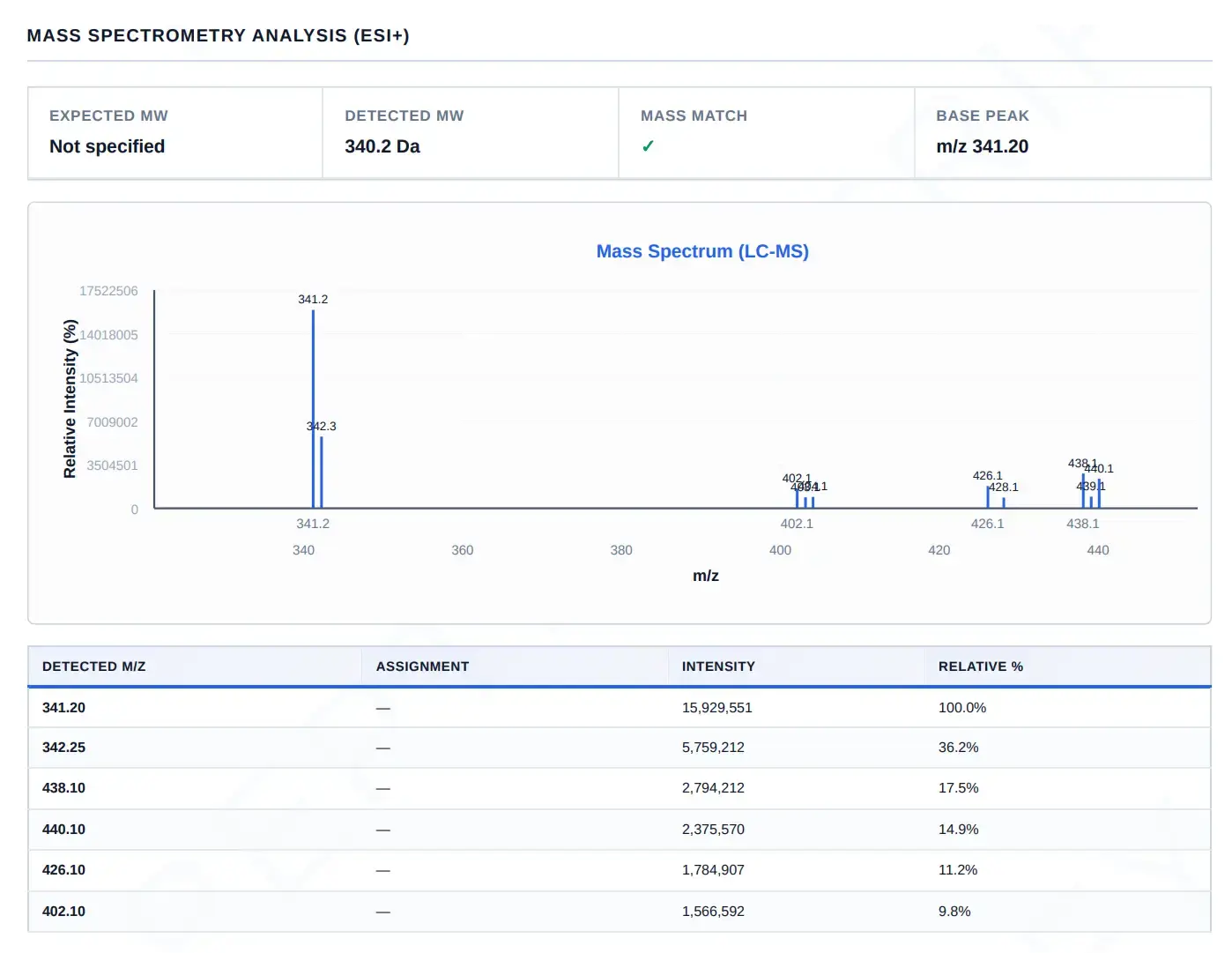
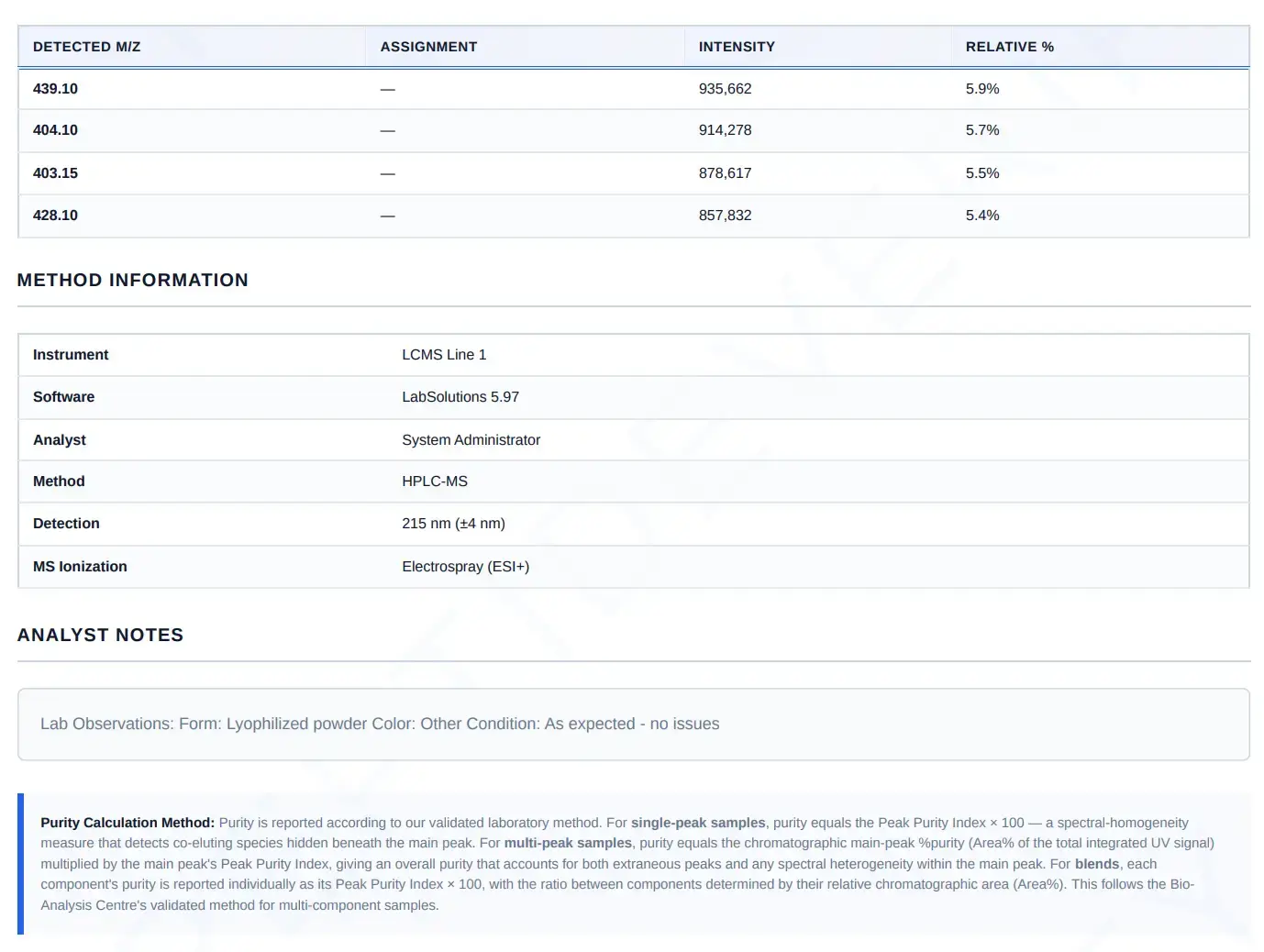
When evaluating KLOW80 80mg, researchers should review more than the product name and stated quantity. Important information can include peptide identity, labeled composition, purity testing, batch number, analytical methods and certificate of analysis.
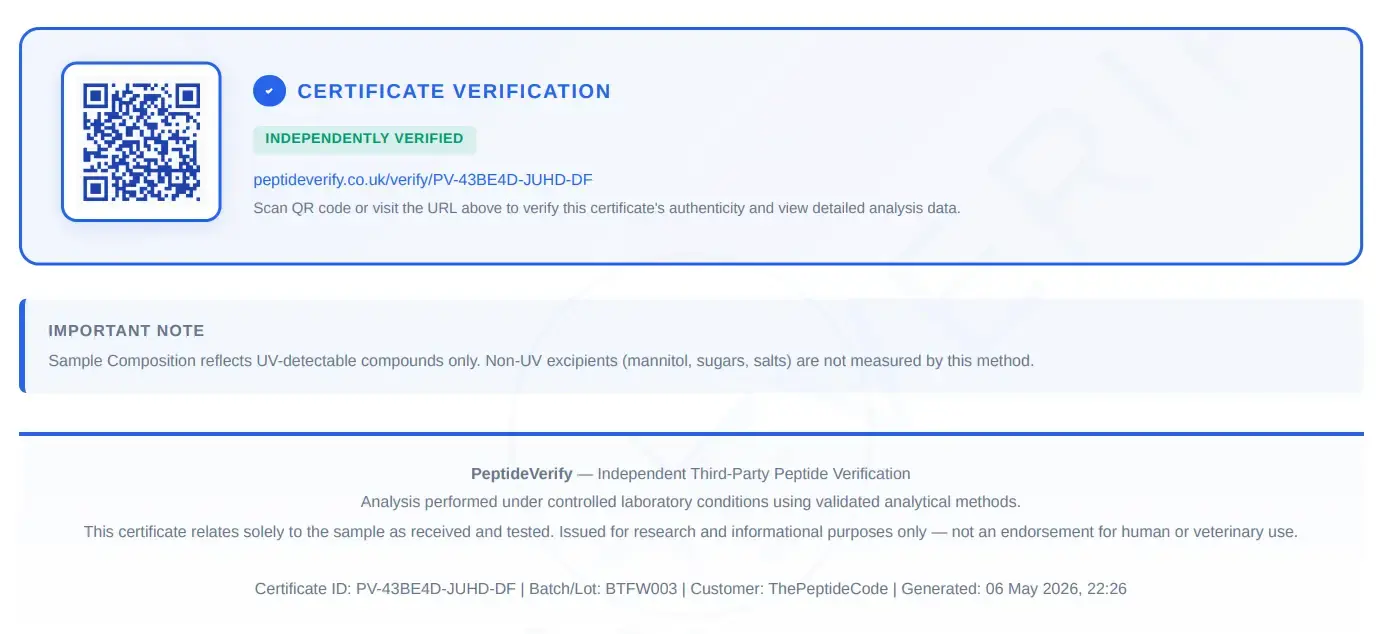
A COA can provide batch-specific information about identity and purity. Some current KLOW80 listings report independent testing, although results can differ between batches and suppliers.
Researchers should therefore rely on the documentation associated with the actual batch being evaluated rather than assuming that a result from another supplier or batch applies to their product.
Storage Considerations
KLOW80 80mg is commonly supplied as a lyophilized research material. Storage instructions can vary depending on the manufacturer and formulation.
Researchers should follow the specific storage requirements supplied with the product and protect research materials from unsuitable environmental conditions. Temperature, moisture, light and handling conditions can all be relevant to the stability of peptide materials.
Keeping the original packaging, lot information and analytical documentation together can also help maintain accurate laboratory records and product traceability.
Safety and Regulatory Context
KLOW80 80mg should be distinguished from an approved pharmaceutical product. Current supplier documentation describes KLOW80 as a research-use formulation rather than an approved medicine.
Safety information for the individual components also cannot simply be combined to establish the safety profile of the complete formulation. Each peptide has its own chemical characteristics, biological activity and research history.
Researchers should therefore avoid assuming that combining four individual peptides creates a predictable or validated safety profile. The absence of controlled studies on the finished KLOW80 formulation is an important limitation when interpreting claims about its biological effects.
Applicable regulations and institutional laboratory requirements should also be reviewed before using research materials.
Understanding the Evidence
One of the most important considerations when researching KLOW80 80mg is separating component-level evidence from blend-level evidence.
GHK-Cu, BPC-157, TB-500-related materials and KPV each have their own scientific literature. However, evidence involving one component does not demonstrate that the same effect occurs when all four are combined.
Likewise, laboratory or animal findings should not automatically be presented as evidence of clinical benefits in humans.
This distinction helps keep product information scientifically accurate and prevents research findings from being overstated.
Final Considerations
KLOW80 80mg is a four-component research formulation commonly listed as 50mg GHK-Cu, 10mg BPC-157, 10mg TB-500 and 10mg KPV.
Its research interest comes from the different biological pathways associated with its individual components. Nevertheless, KLOW80 itself should be treated as a distinct multi-peptide formulation, and research on its individual ingredients should not be presented as direct evidence for the combined product.
When evaluating KLOW80 80mg, researchers should check the exact composition, batch-specific testing, purity documentation, storage requirements and applicable regulations.


Reviews
There are no reviews yet.