


MOTS-c 10mg: Advanced Research & Safety Guide
What Is MOTS-c?
MOTS-c is a mitochondrial-derived peptide that has attracted scientific interest because of its potential role in cellular metabolism, mitochondrial communication, and metabolic stress responses. It is a 16-amino-acid peptide encoded within the mitochondrial 12S ribosomal RNA region.
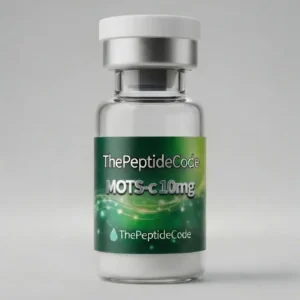
MOTS-c 10mg refers to a research product labeled as containing 10mg of MOTS-c. The stated quantity describes the amount supplied by the manufacturer and should not be interpreted as a clinically established dose or recommendation for human use.
Research into MOTS-c remains an active area of molecular and cellular biology. Studies have investigated how this peptide interacts with metabolic pathways and cellular signaling systems.
Understanding MOTS-c
Mitochondria are important cellular structures involved in energy production and metabolic regulation. In addition to their traditional role in producing cellular energy, researchers have identified signaling molecules encoded by mitochondrial DNA. MOTS-c is one of the mitochondrial-derived peptides being studied in this area.
Experimental research has associated MOTS-c with pathways involved in cellular energy balance and metabolic stress. Researchers have investigated interactions involving AMP-activated protein kinase (AMPK) and other signaling mechanisms.
These findings have made MOTS-c relevant to research involving mitochondrial biology and metabolism. However, laboratory and animal findings should not automatically be interpreted as evidence of equivalent effects in humans.
Research Applications
Research involving MOTS-c 10mg may be relevant to several areas of experimental biology.
Scientists have studied MOTS-c in relation to:
- Mitochondrial signaling
- Cellular metabolism
- Metabolic stress responses
- Glucose-related pathways
- Skeletal muscle research
- Exercise-related physiology
- Cellular energy regulation
- Mitochondrial-derived peptide biology
Research has also investigated changes in circulating mitochondrial-derived peptides under different physiological conditions. These studies can help scientists better understand how mitochondrial signaling may respond to factors such as exercise and metabolic stress.
The precise biological functions of MOTS-c are still being investigated. Consequently, individual experimental findings should be considered within the context of the study design, model system, and available evidence.
Mitochondrial and Metabolic Research
One of the main areas of interest surrounding MOTS-c 10mg is mitochondrial and metabolic research.
Mitochondria communicate with the rest of the cell through multiple signaling mechanisms. Researchers are investigating whether mitochondrial-derived peptides such as MOTS-c participate in this communication and how their activity may change under different cellular conditions.
Experimental studies have examined relationships between MOTS-c and pathways involved in energy metabolism and cellular stress. Research has also explored MOTS-c in skeletal muscle and exercise-related models.
These findings provide useful directions for future investigation but do not establish MOTS-c as an approved treatment or prove that research observations translate directly into human health outcomes.
Product Specifications
When evaluating MOTS-c 10mg, researchers should review the manufacturer’s technical information and batch documentation.
Relevant product information may include:
- Product name: MOTS-c
- Stated quantity: 10mg
- Purity specification
- Peptide identity
- Lot or batch number
- Certificate of Analysis (CoA)
- Analytical testing information
- Manufacturing information
- Storage recommendations
- Research-use labeling
A batch-specific Certificate of Analysis can provide useful information about the identity and stated purity of a particular product lot.
Why Purity and Documentation Matter
Research involving peptides depends heavily on material quality and experimental consistency. Variations in purity, formulation, handling, or storage can potentially affect laboratory results.
For MOTS-c 10mg, researchers should consider whether the supplier provides appropriate analytical documentation. Depending on the product, this may include chromatography, mass spectrometry, purity measurements, and other quality-control information.
Reliable documentation can help researchers determine whether a material is appropriate for a particular laboratory application and can support reproducibility between experiments.
Storage and Handling
Storage requirements should always be determined from the manufacturer’s product documentation. Peptide stability can depend on formulation, container conditions, temperature, moisture, and other environmental factors.
Researchers should therefore check the product label and technical documentation before storing MOTS-c 10mg. Avoid assuming that storage requirements for one peptide automatically apply to another product.
Appropriate laboratory handling procedures should also be followed according to the product’s safety documentation and the requirements of the research environment.
Safety Considerations
Research-grade MOTS-c 10mg should not automatically be considered suitable for human administration. MOTS-c remains under scientific investigation, and questions surrounding clinical safety, appropriate administration, long-term effects, and therapeutic applications require further research.
Research findings can also vary depending on the experimental model and conditions. A biological effect observed in cultured cells or animal models does not establish that the same effect will occur in humans.
Researchers should consult relevant technical and safety documentation and use appropriate laboratory procedures when handling research materials.
How to Evaluate a MOTS-c Product
Before selecting MOTS-c 10mg for research purposes, consider the following:
- Identity: Confirm that the material is identified as MOTS-c.
- Quantity: Verify that the product is labeled as containing 10mg.
- Purity: Review the manufacturer’s stated purity specification.
- Batch information: Check for a lot or batch number.
- Certificate of Analysis: Look for batch-specific analytical documentation.
- Testing: Review available analytical and quality-control information.
- Storage: Follow the manufacturer’s documented storage requirements.
- Research labeling: Confirm that the product is clearly intended for research purposes.
These checks can help researchers assess product documentation before incorporating a material into laboratory work.
Frequently Asked Questions
What is MOTS-c 10mg?
MOTS-c 10mg is a research product labeled as containing 10mg of the mitochondrial-derived peptide MOTS-c. The stated amount represents the quantity supplied and is not a human dosing recommendation.
What is MOTS-c researched for?
MOTS-c has been investigated in areas including mitochondrial signaling, cellular metabolism, metabolic stress responses, skeletal muscle biology, and exercise-related research.
Is MOTS-c an approved medicine?
MOTS-c remains an investigational research subject rather than an established medical treatment. Research findings should be distinguished from clinically established uses.
What should I check when purchasing MOTS-c 10mg?
Researchers should review the product identity, stated quantity, purity information, batch details, Certificate of Analysis, analytical testing, storage requirements, and applicable safety documentation.
Conclusion
MOTS-c 10mg is a research-oriented peptide product associated with the growing field of mitochondrial-derived peptide research. MOTS-c has attracted scientific attention because of its relationship with cellular metabolism, mitochondrial communication, and metabolic stress signaling.
Current research continues to investigate the biological mechanisms associated with MOTS-c. Researchers should distinguish preliminary laboratory findings from established human evidence and evaluate scientific claims according to the quality and type of available research.


Reviews
There are no reviews yet.