

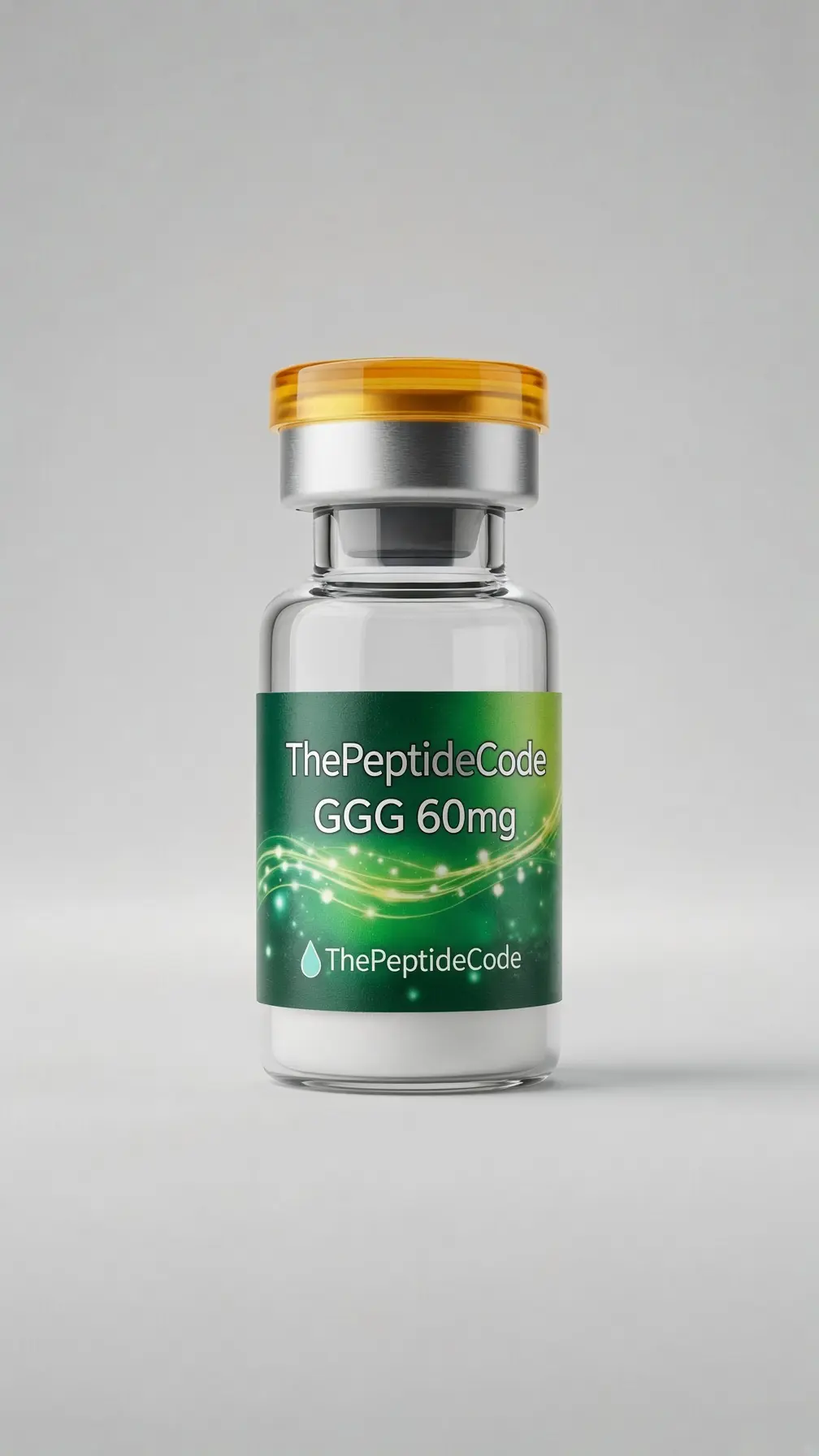
The Triple G 60mg: Advanced Research Peptide Guide
What Is The Triple G 60mg?
The Triple G 60mg is a research product associated with retatrutide, also known as LY3437943 or Triple G. Retatrutide is an investigational peptide that has been studied for its activity at three receptor pathways: GLP-1, GIP and glucagon.
The 60mg presentation is available as a research-grade product from some suppliers. Product specifications, formulation, purity and packaging can vary between manufacturers and batches, so researchers should always review the documentation supplied with the specific product.
Understanding Triple-Receptor Activity
The term “Triple G” is commonly used in connection with retatrutide because of its activity across three receptor systems.
These include:
- GLP-1 receptors
- GIP receptors
- Glucagon receptors
This combination distinguishes retatrutide from compounds that act on only one or two of these pathways. Scientific research has investigated how simultaneous receptor activity may influence metabolic signaling and other biological processes.
Research Background
Retatrutide has been investigated in clinical and preclinical research as an experimental multi-receptor agonist. Published studies have examined its pharmacological properties and its effects on metabolic pathways.
Because the compound remains investigational, research findings should be distinguished from claims about an approved medicine. The existence of clinical research does not mean that every commercially supplied research formulation has been evaluated or approved for human use.
Research Applications
The Triple G 60mg may be evaluated by researchers studying multi-receptor signaling and metabolic biology.
Research involving retatrutide can examine the interaction between GLP-1, GIP and glucagon pathways. Laboratory investigations may also compare triple-receptor activity with compounds that target fewer receptor systems.
Research products should be evaluated according to their stated specifications and intended laboratory application rather than online claims or testimonials.
Product Specifications
When evaluating The Triple G 60mg, researchers should review the available product documentation carefully.
Important information may include:
- Stated quantity
- Compound identification
- Purity
- Formulation
- Batch or lot number
- Certificate of analysis where available
- Analytical testing
- Packaging
- Storage requirements
- Manufacturer information
- Research-use designation
The 60mg quantity should not be confused with a recommended human dose. Product quantity and clinical dosing are separate concepts.
Why Documentation Matters
Research compounds can vary in purity, formulation and quality between suppliers and batches. A certificate of analysis, when available, can provide useful information about the specific batch being evaluated.
Researchers should check that the documentation corresponds to the actual product and lot supplied. Generic information about retatrutide does not necessarily establish the composition or quality of a particular commercial research product.
Clear product identification and batch-specific documentation can help researchers evaluate whether a material is appropriate for their intended laboratory work.
Storage and Handling
Storage requirements depend on the specific formulation and manufacturer’s instructions. Researchers should follow the product-specific documentation rather than assuming that all formulations have identical storage requirements.
Keep research materials appropriately packaged and protected from conditions that could affect their quality or stability. Laboratory handling should follow applicable safety procedures and the manufacturer’s available documentation.
Safety Considerations
Retatrutide is an investigational compound and should not be represented as an approved medicine. Research products can also differ from materials used in controlled clinical trials in terms of manufacturing, sterility, purity and quality control.
The Triple G 60mg should not be assumed to be suitable for injection, ingestion or other human use simply because it is supplied as a research product.
Researchers should review relevant safety documentation and follow appropriate laboratory procedures when handling research materials.
How to Evaluate a Triple G Product
Before purchasing or evaluating a research product, check for:
- Clear product identification
- Stated quantity
- Purity information
- Batch or lot identification
- Certificate of analysis where available
- Analytical testing information
- Storage instructions
- Manufacturer information
- Packaging details
- Clearly stated research-use designation
Reliable product documentation is more useful than relying solely on online descriptions or customer testimonials.
Frequently Asked Questions
What is The Triple G 60mg?
The Triple G 60mg is a research product associated with retatrutide, an investigational peptide studied for activity at GLP-1, GIP and glucagon receptors.
What does Triple G mean?
Triple G is a common name associated with retatrutide’s three-receptor activity involving GLP-1, GIP and glucagon pathways.
Is Triple G the same as retatrutide?
“Triple G” is commonly used as an alternative name for retatrutide, also known as LY3437943. However, product-specific identity and formulation should always be confirmed through the manufacturer’s documentation.
Is The Triple G 60mg an approved medicine?
A research product should not automatically be considered an approved medicine. Retatrutide remains an investigational compound, and regulatory status should be confirmed through current official sources.
What should I check before purchasing?
Review the product identity, stated amount, purity information, batch details, certificate of analysis where available, storage requirements and research-use designation.
Important Disclaimer
This page is provided for research and educational purposes only. Information about retatrutide and triple-receptor agonists does not establish suitability for any particular medical or therapeutic application.
Always follow the manufacturer’s documentation, applicable laboratory procedures and relevant safety requirements.



Reviews
There are no reviews yet.