

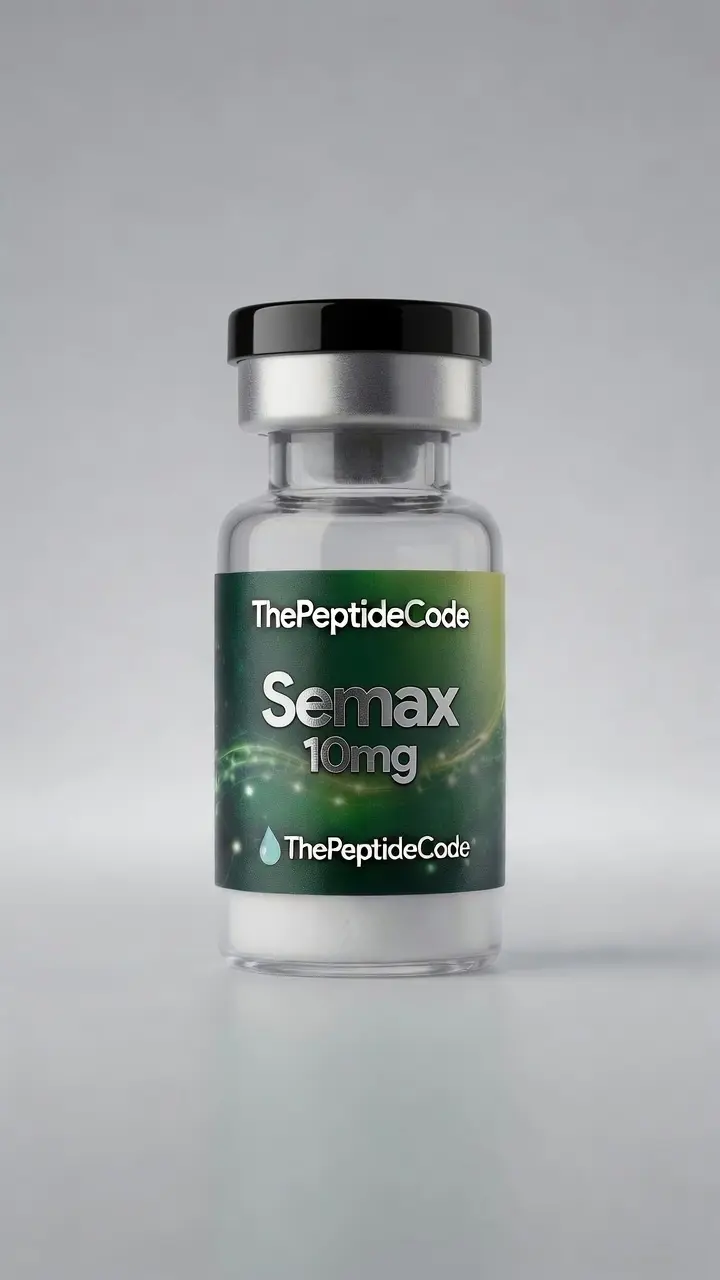
Semax 10mg: Complete Research & Safety Guide
What Is Semax 10mg?
Semax 10mg is a peptide product containing Semax, a synthetic heptapeptide derived from the ACTH(4–10) sequence. The peptide is also described in scientific literature by names including Met-Glu-His-Phe-Pro-Gly-Pro. Semax has been investigated in research involving neurological signaling, neuroprotection, brain-derived neurotrophic factor (BDNF), and other biological pathways.
The 10mg designation refers to the labeled quantity of Semax in the product. Researchers should verify the exact formulation, peptide form, purity, batch information and accompanying documentation supplied with a particular product because specifications can vary between manufacturers.
Semax and Peptide Research
Semax has attracted scientific interest because of its relationship to ACTH-derived peptide sequences and its reported effects in experimental neurological research. Published studies have investigated Semax in areas including ischemic stroke, neurological recovery, neurotrophic signaling and nervous-system function.
For example, a PubMed-indexed study investigated Semax during the acute period of hemispheric ischemic stroke and reported neurological and electrophysiological observations in the study population.
Other research has examined potential relationships between Semax administration and BDNF levels during rehabilitation following ischemic stroke. A 2018 PubMed-indexed study involving 110 patients reported changes in BDNF levels and functional measures, although findings from individual clinical studies should be interpreted within the limitations of their study design and population.
These findings provide research context but should not be interpreted as proof that a commercially marketed Semax 10mg product is effective or appropriate for a particular medical purpose.
Research Applications
Semax 10mg may be of interest to researchers studying peptide signaling and neurological biology. Research topics associated with Semax include:
- Neurobiological signaling
- Neurotrophic pathways
- BDNF-related research
- Peptide-receptor interactions
- Experimental models of neurological injury
- Cerebrovascular research
- Nervous-system recovery
- Structure and activity of ACTH-derived peptides
Experimental research can help researchers investigate how small peptide molecules interact with biological systems. However, laboratory observations, animal studies and individual clinical studies represent different levels of evidence and should be evaluated separately.
Semax 10mg Product Specifications
When evaluating Semax 10mg for research purposes, researchers should review the information supplied by the manufacturer or laboratory supplier. Important details can include the exact peptide name, labeled quantity, purity, lot number, manufacturing information and testing documentation.
A certificate of analysis can be useful when evaluating a particular batch. Depending on the supplier, analytical testing may include methods designed to assess peptide identity and purity.
The stated 10mg quantity describes the amount of material in the product and should not automatically be interpreted as a concentration or preparation specification. Researchers should use the manufacturer’s documentation to determine the exact characteristics of the product.
Storage Considerations
Peptides can be affected by environmental conditions including temperature, moisture, light and repeated exposure to unsuitable conditions. For this reason, Semax 10mg should be stored according to the specific manufacturer’s instructions.
Storage requirements can differ according to formulation and packaging. A dry peptide product may have different requirements from a prepared solution or another formulation. Researchers should therefore rely on the product-specific documentation rather than applying storage information from an unrelated Semax product.
Maintaining the original packaging, batch number and certificate of analysis can also help researchers preserve accurate laboratory records.
Quality and Research Documentation
Quality documentation is particularly important when working with research peptides. Before incorporating Semax 10mg into laboratory research, researchers may review available information regarding peptide identity, purity, batch testing and manufacturing specifications.
Semax can also be confused with other peptides or peptide fragments because of overlapping terminology in scientific and commercial sources. Confirming the exact chemical identity is therefore important when comparing research results or product specifications.
Published literature identifies Semax as a synthetic derivative of ACTH(4–10), while individual studies may describe the compound using different terminology.
Safety and Regulatory Context
The regulatory status of Semax varies by jurisdiction and should be checked independently from the claims made by commercial suppliers. FDA materials have specifically discussed Semax-related bulk drug substances and identified information gaps concerning human pharmacokinetics and potential safety concerns. An FDA review reported that it did not identify human pharmacokinetic studies following exposure to Semax free base or Semax acetate.
This distinction is important when evaluating Semax 10mg. Research findings or historical clinical publications do not automatically establish that every commercially available Semax formulation has been evaluated for quality, safety or regulatory approval.
Researchers should also distinguish between a specific research product and Semax as a chemical entity discussed in scientific literature. Formulation, purity, route of administration and manufacturing quality can all affect how a particular product should be evaluated.
Understanding the Research Evidence
The published literature on Semax includes both experimental and human studies. Some PubMed-indexed publications have investigated neurological conditions and reported potentially relevant biological or clinical observations.
At the same time, individual studies have limitations, including sample size, study design, geographic concentration and differences in methodology. Research results should therefore be assessed according to the population studied, experimental conditions and measured outcomes rather than generalized to unrelated applications.
For researchers, this makes accurate product identification and careful interpretation of published evidence particularly important.
Final Considerations
Semax 10mg is a research peptide associated with ACTH-derived peptide biology and has been investigated in areas involving neurological signaling, neurotrophic pathways and cerebrovascular research. Its scientific history includes experimental work as well as published human studies, particularly from Russian research institutions.
When evaluating Semax 10mg, researchers should consider the exact product identity, labeled quantity, purity information, batch documentation, storage requirements and applicable regulatory framework. Scientific findings should be interpreted according to the quality and limitations of the underlying evidence.


Reviews
There are no reviews yet.