

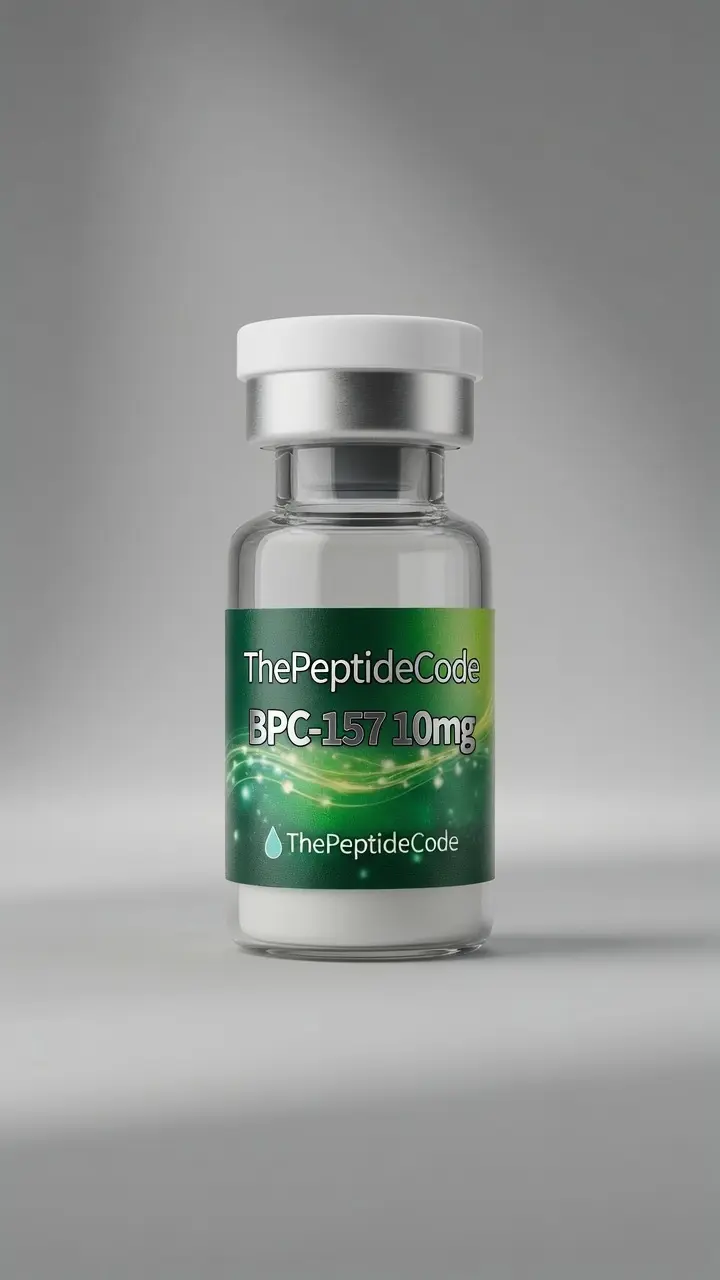
BPC-157 10mg: Complete Research & Safety Guide
What Is BPC-157 10mg?
BPC-157 10mg is a research peptide containing BPC-157, a synthetic 15-amino-acid peptide that has been investigated in preclinical and limited human research. The compound is also identified in scientific and commercial literature by names including Body Protection Compound 157 and PL-14736. Research involving BPC-157 has examined biological signaling, tissue-related processes, gastrointestinal research models and other areas of experimental biology.
BPC-157 10mg is commonly supplied as a lyophilized, or freeze-dried, powder in a sealed vial. Product specifications can vary between manufacturers, so researchers should confirm the exact batch information, stated quantity, purity, identity testing and accompanying Certificate of Analysis before beginning laboratory work.
BPC-157 10mg Research Background
BPC-157 has attracted scientific interest because of findings from laboratory and animal studies investigating cellular signaling and tissue-response pathways. Experimental research has explored areas including gastrointestinal models, vascular responses, connective-tissue processes and other biological mechanisms.
However, findings from animal or laboratory studies should not automatically be interpreted as evidence of effectiveness in humans. The available human research remains limited, with small studies and short observation periods. In 2026, the U.S. Food and Drug Administration reviewed BPC-157-related bulk drug substances and noted limited safety information for proposed routes of administration.
For this reason, BPC-157 10mg is best described in a research context rather than as an established medical treatment.
Product Specifications
A typical BPC-157 10mg research product may contain 10mg of BPC-157 in lyophilized powder form. Commercial research suppliers commonly identify the compound using CAS number 137525-51-0 and may provide HPLC and mass-spectrometry testing for identity and purity.
Important specifications to review include:
- Compound: BPC-157
- Quantity: 10mg
- Format: Lyophilized research peptide
- Identification: Batch or lot number
- Purity: Verify using the current Certificate of Analysis
- Identity testing: HPLC, LC-MS or equivalent analytical methods
- Documentation: Certificate of Analysis where available
A Certificate of Analysis should be matched to the specific batch whenever possible. Published laboratory reports demonstrate that testing can include HPLC purity measurements and LC-MS identity confirmation, although results from one batch should not be assumed to represent another batch.
Storage and Handling Considerations
BPC-157 10mg should be stored according to the manufacturer’s current documentation. Lyophilized research peptides are generally protected from excessive heat, moisture and unnecessary exposure to light. Researchers should follow the storage requirements supplied with the specific product and maintain appropriate laboratory documentation.
Storage conditions can affect the physical and analytical stability of research materials. Researchers should therefore avoid assuming that storage recommendations for one supplier or batch automatically apply to another product.
Research Applications
BPC-157 10mg may be used as a laboratory research material when investigators are studying peptide properties, biological mechanisms, analytical characteristics or experimental models. Research areas associated with BPC-157 include gastrointestinal biology, cellular signaling and tissue-response mechanisms.
The scientific literature includes substantial preclinical work, but the amount of controlled human evidence is considerably smaller. The FDA’s 2026 review specifically noted that available clinical studies were limited by factors including small sample sizes, short durations and limited safety monitoring.
This distinction is important when evaluating claims about BPC-157. Research findings can help identify potential biological mechanisms for further investigation, but they do not by themselves establish clinical safety or therapeutic effectiveness.
Quality and Documentation
When evaluating BPC-157 10mg for laboratory research, documentation is an important part of product assessment. Researchers should look for a clearly identified batch number, analytical testing information and a Certificate of Analysis that corresponds to the material being evaluated.
Useful analytical information may include HPLC purity, mass-spectrometry identity testing, net peptide content and, where applicable, additional quality-control measurements. Some current research suppliers publish batch-specific testing rather than relying on a generic product specification.
Safety Considerations
BPC-157 is not an FDA-approved drug for general human therapeutic use. The FDA has identified potential concerns involving immunogenicity and peptide-related impurities and has stated that available safety information is limited for certain proposed routes of administration.
Because of these limitations, BPC-157 10mg should not be presented as a proven treatment or as a substitute for an approved medical product. Researchers should evaluate the available scientific evidence, product documentation and applicable laboratory requirements before using any research material.
Summary
BPC-157 10mg is a synthetic research peptide studied across preclinical and limited human research. Its scientific literature includes investigations into several biological processes, while current regulatory materials emphasize that important safety information remains limited.
For laboratory research, attention should be given to product identity, batch documentation, analytical testing, storage requirements and the distinction between preclinical findings and established human clinical evidence.



Reviews
There are no reviews yet.