

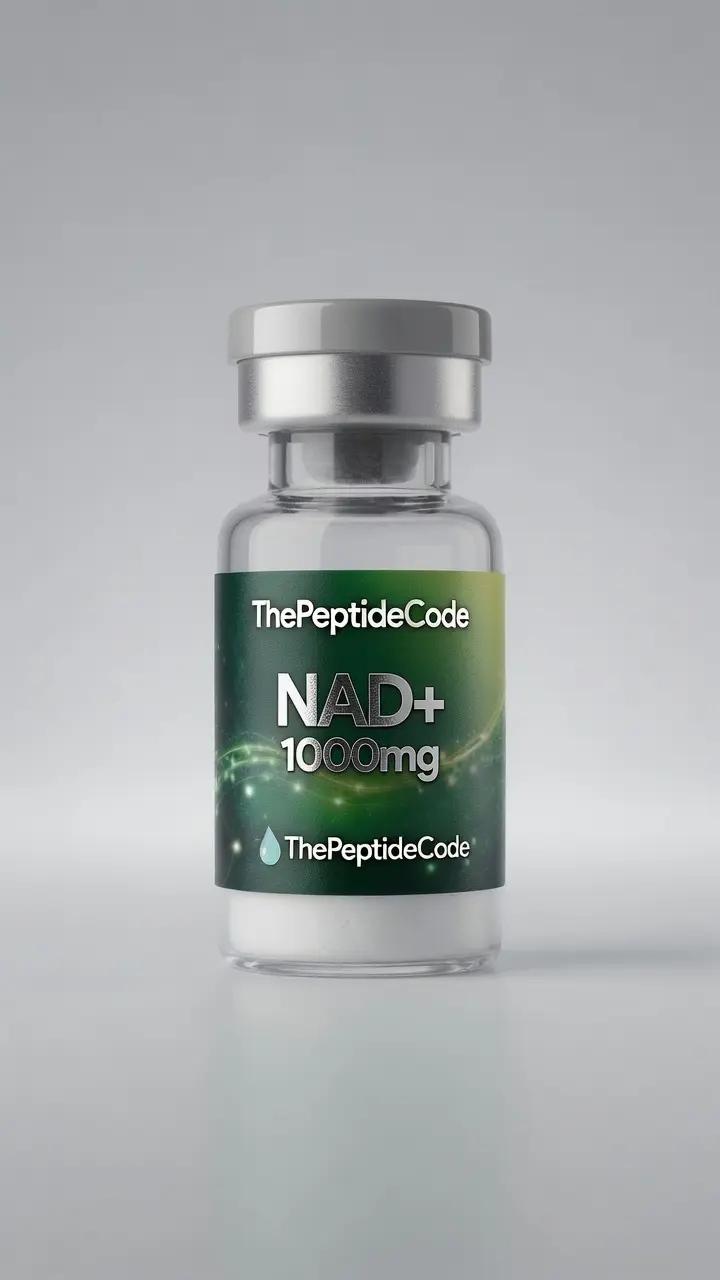
NAD+ 1000mg: Complete Research & Safety Guide
What Is NAD+ 1000mg?
NAD+ 1000mg is a product containing nicotinamide adenine dinucleotide, commonly abbreviated as NAD+. NAD+ is a naturally occurring coenzyme found in cells throughout the body and is involved in numerous biochemical reactions related to cellular metabolism and energy production.
Unlike peptide products, NAD+ is a small biological molecule that participates directly in oxidation-reduction reactions. The molecule exists primarily in oxidized and reduced forms, NAD+ and NADH, which work together in cellular metabolic pathways.
The 1000mg designation refers to the labeled quantity of NAD+ in a particular product. Exact formulation, purity, packaging and testing specifications can vary between manufacturers, so product documentation should be reviewed before using NAD+ 1000mg for laboratory research.
NAD+ and Cellular Research
NAD+ is an important component of cellular metabolism. It acts as a coenzyme in reactions that transfer electrons and is closely involved in pathways responsible for converting nutrients into usable cellular energy.
NAD+ is also connected with several enzyme families involved in cellular signaling and regulation. These include sirtuins and poly(ADP-ribose) polymerases, commonly referred to as PARPs. Through these pathways, NAD+ research extends beyond energy metabolism into areas such as DNA repair, cellular stress responses and metabolic regulation.
Because NAD+ is involved in many biological processes, it has become an important subject of laboratory research investigating how cellular NAD+ availability changes under different physiological and experimental conditions.
Research Applications
NAD+ 1000mg may be relevant to laboratory studies involving cellular metabolism, mitochondrial biology and biochemical signaling.
Research areas associated with NAD+ include:
- Cellular energy metabolism
- Mitochondrial function
- Oxidation-reduction reactions
- DNA repair pathways
- Sirtuin biology
- PARP activity
- Cellular stress responses
- Metabolic signaling
- Aging-related cellular research
- NAD+ biosynthesis and recycling
Researchers may also study the relationship between NAD+ and its precursor molecules, including nicotinamide, nicotinamide riboside and nicotinamide mononucleotide. These compounds are chemically and biologically distinct from NAD+ itself and should not automatically be treated as interchangeable.
NAD+ 1000mg Product Specifications
When evaluating NAD+ 1000mg, researchers should review the complete product specification rather than relying only on the product name.
Relevant information can include:
- Chemical identity
- Labeled quantity
- Purity
- Batch or lot number
- Manufacturing information
- Analytical testing
- Certificate of analysis
- Formulation details
- Storage requirements
A certificate of analysis can provide useful information about the identity and purity of a particular batch. Analytical methods and documentation can differ between suppliers, so researchers should evaluate the actual documentation provided for the product being considered.
The 1000mg label indicates the stated quantity of material and should not automatically be interpreted as a concentration or preparation specification.
NAD+ and Mitochondrial Research
Mitochondria are major sites of cellular energy metabolism, and NAD+ plays an important role in the reactions that connect nutrient metabolism with energy production.
Within mitochondrial research, NAD+ is particularly relevant to electron-transfer processes and metabolic pathways that contribute to the production of ATP. Changes in cellular NAD+ and NADH levels can influence the balance of metabolic reactions.
Researchers therefore investigate NAD+ as part of broader studies into mitochondrial function, cellular metabolism and metabolic adaptation.
However, laboratory findings involving cellular or animal models should not automatically be interpreted as evidence that a commercially available NAD+ 1000mg product produces a particular health outcome in humans.
NAD+ and Cellular Signaling
NAD+ is also important because it serves as a substrate for several enzyme systems. Sirtuins, for example, are NAD+-dependent enzymes involved in processes related to protein modification and cellular regulation.
PARP enzymes represent another important area of NAD+ research. PARPs use NAD+ during processes associated with cellular responses to DNA damage.
These mechanisms demonstrate why NAD+ research encompasses multiple biological systems rather than being limited to energy production.
The concentration and availability of NAD+ within different tissues can also vary depending on metabolic conditions, cellular activity and the pathways responsible for NAD+ synthesis and consumption.
Storage and Handling Considerations
NAD+ products should be stored according to the manufacturer’s specific instructions. Environmental conditions such as temperature, moisture, light and exposure to unsuitable conditions can affect the stability of biochemical materials.
Researchers should follow the storage information supplied with the particular NAD+ 1000mg product rather than assuming that instructions for another NAD+ formulation are identical.
Maintaining the original packaging, batch information and certificate of analysis can also help preserve accurate laboratory records and support product traceability.
Quality and Research Documentation
Quality documentation is an important consideration when evaluating NAD+ 1000mg for research. Researchers may review the product’s certificate of analysis, stated purity, batch identification and analytical testing information.
It is also important to distinguish NAD+ from related NAD+ precursors. Nicotinamide riboside, nicotinamide mononucleotide and nicotinamide are not the same chemical substance as NAD+, even though they are involved in related metabolic pathways.
Accurate chemical identification is therefore important when comparing a product with published scientific research.
Safety and Regulatory Considerations
The regulatory status of NAD+ products can vary according to jurisdiction, formulation and intended use. A product marketed for laboratory research should not automatically be assumed to have been evaluated or approved as a medicine.
Researchers should also distinguish between scientific research involving NAD+ and claims made about individual commercial products. Evidence concerning NAD+ biology does not necessarily establish the safety, effectiveness or quality of a specific NAD+ 1000mg formulation.
For research purposes, product-specific documentation, analytical testing and applicable regulatory requirements should be reviewed before incorporating a material into experimental work.
Understanding the Evidence
NAD+ has a well-established role in basic cellular biochemistry, but research into NAD+ supplementation and strategies designed to alter NAD+ availability covers a much broader range of questions.
Studies can differ substantially in the type of NAD+ preparation used, route of administration, experimental model, dosage, duration and measured outcomes. Results from one formulation or experimental setting should therefore not automatically be generalized to another.
This makes careful interpretation of the scientific literature particularly important when evaluating NAD+ 1000mg.
Final Considerations
NAD+ 1000mg contains a molecule that plays a central role in cellular metabolism, oxidation-reduction reactions and several important signaling pathways. Its connection with mitochondrial metabolism, sirtuin activity, PARP biology and cellular stress responses makes NAD+ an active area of scientific research.
When evaluating NAD+ 1000mg, researchers should consider the exact chemical identity, labeled quantity, purity, batch documentation, analytical testing and storage requirements. Research findings should also be interpreted according to the specific experimental model and limitations of each study.


Reviews
There are no reviews yet.