

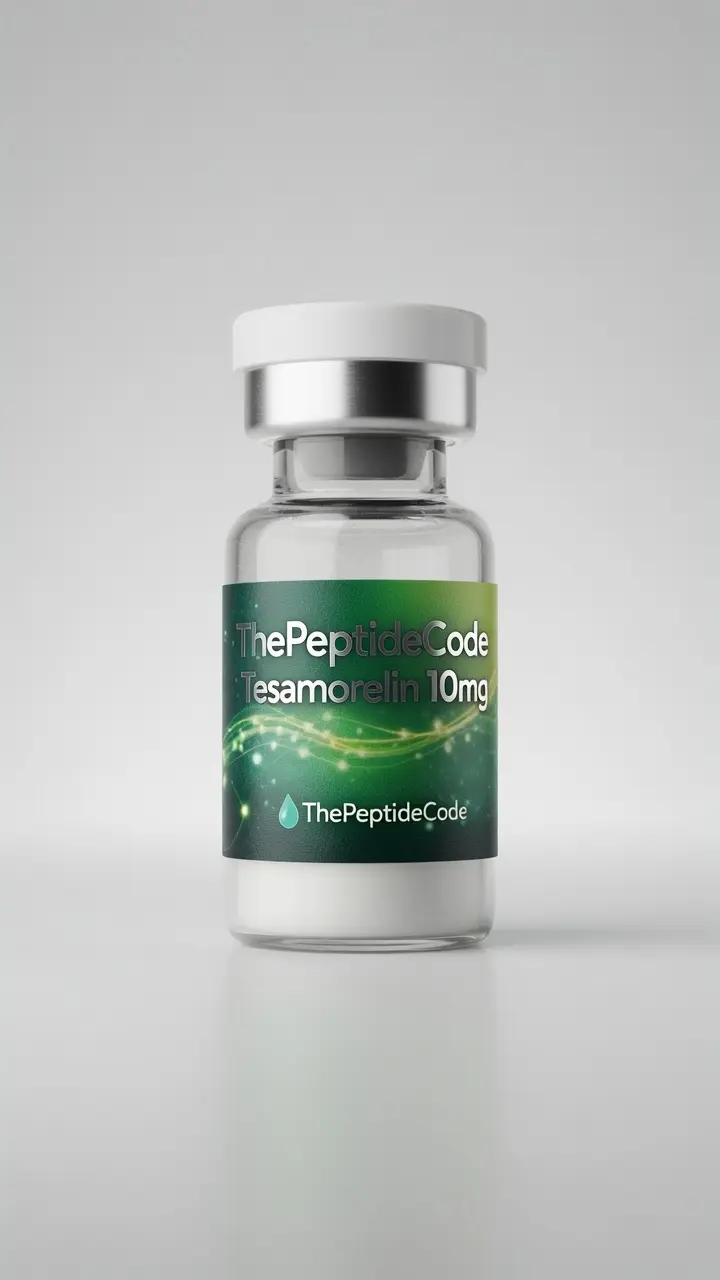
Tesamorelin 10mg: Complete Research & Safety Guide
What Is Tesamorelin?
Tesamorelin 10mg is a research-oriented peptide product associated with tesamorelin, a synthetic analogue of growth hormone-releasing hormone (GHRH). Tesamorelin has been studied for its ability to stimulate the pituitary gland’s release of growth hormone through the GHRH signaling pathway.
Tesamorelin is structurally related to GHRH but has been modified to improve its stability compared with naturally occurring GHRH. Research involving tesamorelin has focused on growth hormone signaling, endocrine physiology, metabolism, and body-composition-related outcomes.
The 10mg designation refers to the labeled quantity supplied by the manufacturer. It should not be interpreted as a recommended clinical dose or instruction for human administration.
Understanding Tesamorelin
Growth hormone-releasing hormone is a naturally occurring hypothalamic hormone that stimulates the pituitary gland to release growth hormone. Tesamorelin is designed to interact with the GHRH receptor and has therefore been studied as a tool for investigating the GHRH–growth hormone signaling pathway.
Research into Tesamorelin 10mg can help provide context for understanding how GHRH analogues interact with endocrine pathways.
Growth hormone secretion is naturally regulated through several interconnected mechanisms, including GHRH, somatostatin, and feedback involving insulin-like growth factor 1 (IGF-1). Because of this complexity, the effects observed in experimental research depend on the biological model and conditions used.
Research Background
Tesamorelin has a more extensive clinical research history than many experimental peptides. It has been studied in controlled clinical settings, including research involving adults with HIV-associated lipodystrophy.
The U.S. Food and Drug Administration has approved tesamorelin under the brand Egrifta SV for reducing excess abdominal fat in HIV-infected adults with lipodystrophy. This regulatory status applies to the approved prescription formulation and indication, not automatically to a research product labeled Tesamorelin 10mg. Researchers should distinguish between an approved pharmaceutical product and an independently marketed research material.
Tesamorelin research has also contributed to understanding the relationship between GHRH signaling, growth hormone secretion, and downstream IGF-1 activity.
Potential Research Applications
Research involving Tesamorelin 10mg may be relevant to several scientific areas, including:
- GHRH receptor signaling
- Growth hormone research
- Pituitary endocrine physiology
- IGF-1 signaling
- Metabolic research
- Body-composition research
- Peptide pharmacology
- Endocrine feedback mechanisms
- Pharmacokinetic research
Researchers can use these areas to investigate how GHRH analogues affect endocrine signaling and how changes in one hormonal pathway may influence downstream biological processes.
Results should be interpreted according to the study design and should not automatically be generalized to different populations or products.
GHRH and Growth Hormone Research
The primary scientific interest in Tesamorelin 10mg is its relationship with the GHRH pathway.
GHRH is produced by the hypothalamus and acts on receptors in the anterior pituitary. Activation of the GHRH receptor promotes the release of growth hormone. Growth hormone can subsequently influence production of IGF-1 and other downstream physiological processes.
Tesamorelin has been studied because it can mimic important aspects of GHRH signaling. This makes it useful for investigating the regulation of growth hormone secretion and related endocrine pathways.
Researchers should remember that endocrine signaling is highly regulated. Changes observed in one experimental setting may not occur in the same way under different conditions.
Product Specifications
When evaluating Tesamorelin 10mg, researchers should review the manufacturer’s technical documentation.
Important product information may include:
- Product name: Tesamorelin
- Labeled quantity: 10mg
- Peptide identity
- Purity specification
- Lot or batch number
- Certificate of Analysis (CoA)
- Analytical testing
- Manufacturing information
- Storage requirements
- Research-use labeling
The stated 10mg quantity identifies the amount supplied by the product and should not be interpreted as dosing guidance.
A batch-specific Certificate of Analysis can help researchers evaluate the identity and stated purity of a particular product lot.
Why Purity and Documentation Matter
Peptide quality is an important consideration for reproducible research. Differences in purity, degradation, formulation, or contamination may affect experimental results.
For Tesamorelin 10mg, researchers should review available analytical documentation and determine how peptide identity and purity have been evaluated.
Depending on the supplier, documentation may include HPLC analysis, mass spectrometry, purity testing, and other quality-control information.
Researchers should also verify whether the documentation applies to the finished product or to the underlying raw peptide.
Storage and Handling
Storage requirements should be taken directly from the manufacturer’s documentation for the specific Tesamorelin 10mg product.
Peptide stability can depend on formulation, temperature, moisture, light exposure, packaging, and other conditions. Storage instructions can therefore vary between products.
Researchers should follow the supplier’s documented requirements and applicable laboratory procedures when storing or handling research materials.
Safety Considerations
Research-grade Tesamorelin 10mg should not automatically be considered suitable for human administration.
Tesamorelin has a recognized prescription-medication history, but this does not mean that a commercially supplied research product has the same formulation, manufacturing controls, sterility, quality standards, or regulatory status as an approved pharmaceutical product.
Tesamorelin-related clinical information includes potential effects involving glucose metabolism, IGF-1 levels, fluid retention, joint-related symptoms, and other adverse effects. Researchers should consult authoritative prescribing and regulatory information when evaluating the established clinical safety profile.
Research use should therefore be clearly separated from approved medical use.
How to Evaluate Tesamorelin 10mg
Before selecting Tesamorelin 10mg for laboratory research, consider:
- Identity: Confirm that the material is identified as tesamorelin.
- Quantity: Verify the stated 10mg amount.
- Purity: Review the manufacturer’s purity specification.
- Batch information: Confirm the lot or batch number.
- Certificate of Analysis: Check for batch-specific documentation.
- Analytical testing: Review available identity and purity testing.
- Formulation: Determine whether the documentation describes the finished product.
- Storage: Follow the manufacturer’s stated storage requirements.
- Research labeling: Confirm that the product is clearly designated for research purposes.
Frequently Asked Questions
What is Tesamorelin 10mg?
Tesamorelin 10mg is a research-oriented product labeled as containing 10mg of tesamorelin, a synthetic GHRH analogue studied in endocrine and growth hormone research.
What does tesamorelin research focus on?
Research has examined tesamorelin in relation to GHRH receptor signaling, growth hormone secretion, IGF-1 pathways, endocrine physiology, metabolism, and body-composition-related outcomes.
Is tesamorelin an approved medication?
Tesamorelin has an FDA-approved prescription formulation for a specific indication involving excess abdominal fat in adults with HIV-associated lipodystrophy. That approval applies to the authorized pharmaceutical product and indication, not automatically to research products labeled Tesamorelin 10mg.
What should researchers check before purchasing Tesamorelin 10mg?
Researchers should verify peptide identity, quantity, purity, batch information, Certificate of Analysis, analytical testing, storage requirements, and research-use labeling.
Is Tesamorelin 10mg intended for human use?
A product labeled for research should not automatically be considered suitable for human administration. Researchers should rely on the manufacturer’s documentation and applicable regulatory information.
Conclusion
Tesamorelin 10mg is a research-oriented peptide product associated with GHRH and growth hormone signaling research. Tesamorelin has been investigated extensively in endocrine research and also has a prescription pharmaceutical history under a specific approved indication.
Researchers should distinguish between the scientific and regulatory information associated with approved pharmaceutical tesamorelin and the characteristics of an independently supplied research product. Product identity, purity, batch documentation, analytical testing, and storage requirements should be reviewed carefully.


Reviews
There are no reviews yet.