

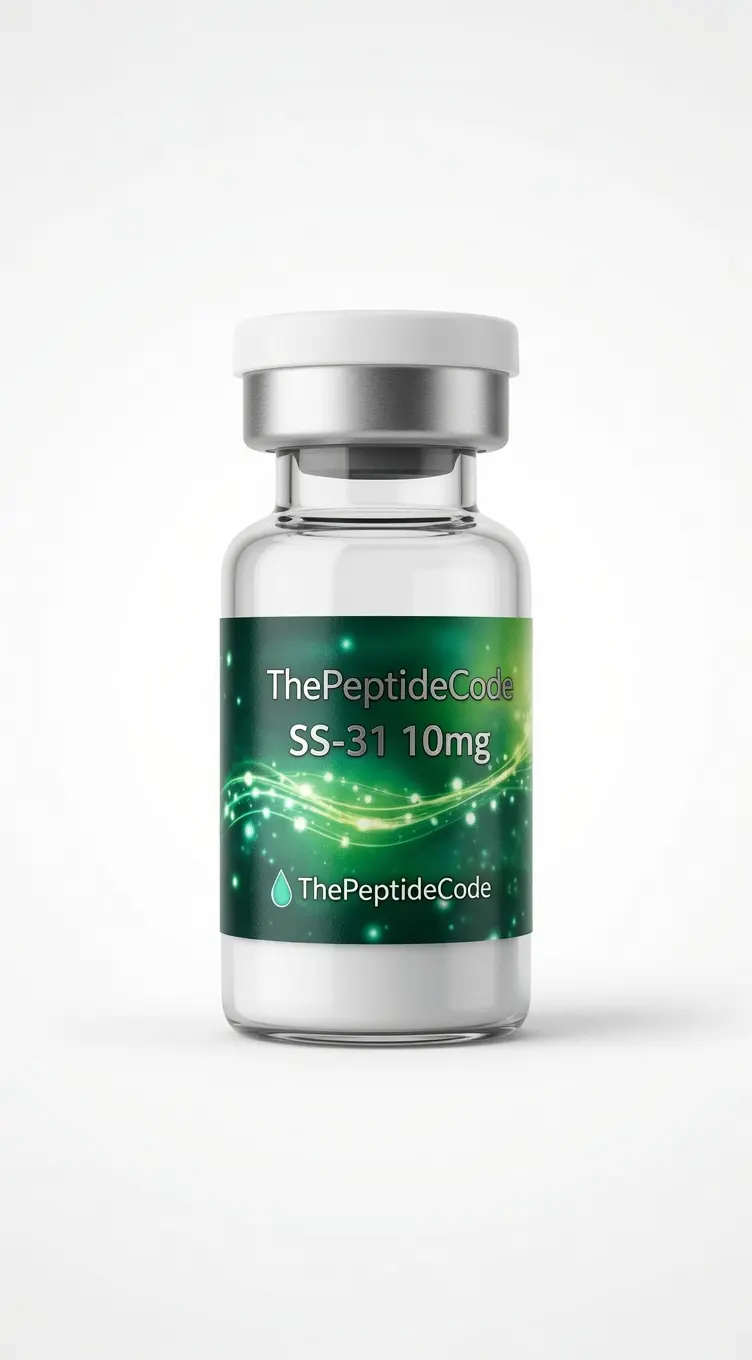
SS-31 10mg: Advanced Research & Safety Guide
What Is SS-31?
SS-31 10mg is a research-oriented peptide product associated with SS-31, also known as elamipretide. SS-31 is a mitochondria-targeted tetrapeptide that has been investigated extensively in mitochondrial biology and cellular research.
Research has focused on how SS-31 interacts with mitochondrial membranes and cardiolipin, a phospholipid that plays an important role in mitochondrial membrane structure and function. This has made SS-31 an area of interest in studies examining mitochondrial bioenergetics, oxidative stress, and cellular responses to mitochondrial dysfunction.
The 10mg designation refers to the labeled quantity supplied by the manufacturer. It should not be interpreted as a recommended clinical dose or instruction for human administration.
Understanding SS-31 and Elamipretide
SS-31 is a small mitochondria-targeted peptide designed to interact with mitochondrial membranes. Unlike peptides that primarily target cell-surface receptors, SS-31 has been studied for its ability to localize to mitochondria and interact with components of the inner mitochondrial membrane.
A major area of interest is cardiolipin. Cardiolipin is a distinctive phospholipid found in the inner mitochondrial membrane and is important for mitochondrial structure and energy-related processes.
Researchers have investigated whether SS-31 can influence mitochondrial function under conditions associated with oxidative or metabolic stress.
These findings have made SS-31 relevant to experimental research involving mitochondrial physiology, cellular metabolism, and mechanisms of mitochondrial dysfunction.
Research Background
Research involving SS-31 10mg belongs to a broader field of mitochondrial-targeted peptide research.
Preclinical studies have investigated SS-31 in models involving mitochondrial dysfunction, oxidative stress, cardiovascular biology, muscle function, and cellular aging.
Recent studies continue to expand this research. For example, 2026 research in a heart-failure-with-preserved-ejection-fraction rat model investigated elamipretide in relation to skeletal-muscle mitochondrial function and reported improvements in several measures of muscle performance and mitochondrial function. These were animal-model findings and do not establish equivalent effects in humans.
Other recent research has examined SS-31 in cellular models of stress and senescence, further demonstrating the continued interest in its mitochondrial mechanisms.
Potential Research Applications
Research involving SS-31 10mg may be relevant to several areas of experimental science, including:
- Mitochondrial biology
- Cardiolipin research
- Oxidative-stress research
- Cellular bioenergetics
- Mitochondrial membrane function
- Cardiovascular research
- Skeletal-muscle research
- Cellular aging and senescence
- Metabolic research
- Peptide pharmacology
These applications allow researchers to investigate how mitochondrial-targeted compounds behave under different experimental conditions.
Research results can vary considerably according to the model, concentration, exposure conditions, and experimental methodology.
Mitochondrial Function Research
One of the main reasons SS-31 10mg is of scientific interest is its relationship with mitochondrial function.
Mitochondria are responsible for producing much of the energy required by cells. Their inner membrane contains cardiolipin, which contributes to membrane organization and the function of mitochondrial protein complexes.
Experimental research has investigated whether SS-31 can interact with cardiolipin and influence mitochondrial membrane properties.
A 2026 review described SS-31 as a mitochondria-targeted peptide and discussed its relationship with mitochondrial homeostasis and cardiolipin-related mechanisms.
Researchers should distinguish these mechanistic and preclinical findings from established clinical outcomes.
Oxidative Stress Research
Oxidative stress is another important area of SS-31 research.
Mitochondrial dysfunction can be associated with changes in reactive oxygen species production and cellular stress responses. Researchers have therefore investigated whether mitochondria-targeted compounds can modify these processes in experimental models.
Recent cell-based research found that SS-31 affected mitochondrial reactive oxygen species and several markers associated with cellular senescence in a doxorubicin-induced cardiomyoblast model.
Such findings provide useful experimental information but should not be interpreted as evidence that SS-31 prevents or treats disease in humans.
Product Specifications
When evaluating SS-31 10mg, researchers should review the manufacturer’s technical documentation.
Important information may include:
- Product name: SS-31
- Alternative name: Elamipretide
- Labeled quantity: 10mg
- Peptide identity
- Purity specification
- Lot or batch number
- Certificate of Analysis (CoA)
- Analytical testing
- Manufacturing information
- Storage requirements
- Research-use labeling
The stated 10mg quantity identifies the amount supplied by the product and should not be interpreted as dosing guidance.
A batch-specific Certificate of Analysis can provide useful information about the identity and stated purity of a particular product lot.
Why Purity and Documentation Matter
Reliable product characterization is important for peptide research. Differences in purity, degradation, formulation, or contamination may affect experimental observations.
For SS-31 10mg, researchers should review available analytical documentation and determine how peptide identity and purity were evaluated.
Depending on the supplier, documentation may include HPLC, mass spectrometry, purity testing, and other quality-control measurements.
Researchers should also determine whether analytical testing applies to the finished product or to the underlying peptide material.
Storage and Handling
Storage requirements should be obtained directly from the manufacturer for the specific SS-31 10mg product.
Peptide stability can depend on temperature, moisture, light exposure, formulation, packaging, and other environmental factors.
Researchers should therefore follow the supplier’s documented storage requirements rather than assuming that storage conditions for another peptide automatically apply to SS-31.
Laboratory handling should follow appropriate institutional procedures and applicable safety documentation.
Safety Considerations
Research-grade SS-31 10mg should not automatically be considered suitable for human administration.
Although SS-31 has been investigated in clinical and preclinical research, the scientific evidence includes different experimental models with varying results. For example, a 2026 animal study reported improvements in mitochondrial and skeletal-muscle measures, while another 2026 study in a rat model found improved myocardial bioenergetics without corresponding functional benefits.
These differences demonstrate why individual research findings should be interpreted within the context of the study design.
Researchers should review the manufacturer’s safety documentation and follow appropriate laboratory procedures when handling research materials.
How to Evaluate SS-31 10mg
Before selecting SS-31 10mg for research, consider:
- Identity: Confirm that the material is identified as SS-31 or elamipretide.
- Quantity: Verify the stated 10mg amount.
- Purity: Review the manufacturer’s purity specification.
- Batch information: Confirm the lot or batch number.
- Certificate of Analysis: Look for batch-specific documentation.
- Analytical testing: Review available identity and purity testing.
- Formulation: Determine whether the documentation describes the finished product.
- Storage: Follow the manufacturer’s stated storage requirements.
- Research labeling: Confirm that the product is designated for research purposes.
Frequently Asked Questions
What is SS-31 10mg?
SS-31 10mg is a research-oriented product labeled as containing 10mg of SS-31, also known as elamipretide. SS-31 is a mitochondria-targeted tetrapeptide studied in mitochondrial and cellular research.
What is SS-31 also called?
SS-31 is commonly known as elamipretide. Scientific literature also describes it as a mitochondria-targeted peptide.
What is SS-31 researched for?
Research has investigated SS-31 in areas including mitochondrial function, cardiolipin biology, oxidative stress, cellular bioenergetics, cardiovascular research, muscle biology, and cellular senescence.
Is SS-31 an approved treatment?
The regulatory status of a specific SS-31 product depends on the jurisdiction and formulation. A research-labeled SS-31 10mg product should not automatically be considered an approved pharmaceutical or suitable for human administration.
What should researchers check before purchasing SS-31 10mg?
Researchers should verify peptide identity, quantity, purity, batch information, Certificate of Analysis, analytical testing, storage requirements, and research-use labeling.
Conclusion
SS-31 10mg is a research-oriented peptide product associated with elamipretide and the study of mitochondrial function. Its scientific importance comes from its mitochondria-targeted properties and research involving cardiolipin, mitochondrial bioenergetics, and cellular stress.
Recent research continues to investigate SS-31 across cellular and animal models, including mitochondrial, cardiovascular, muscle, and senescence-related studies.
Researchers should distinguish experimental findings from established clinical outcomes and carefully review the documentation for the specific product being evaluated.



Reviews
There are no reviews yet.